Contac: Sodoweredasitoffice@gmail.com
Ancient and historical tourist destinations of our district
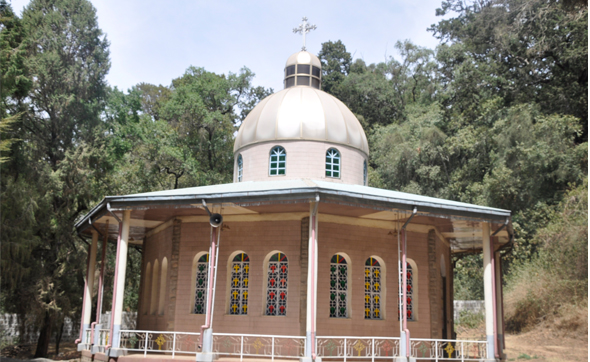

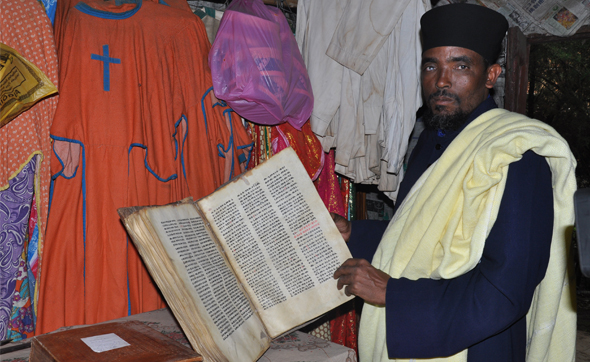
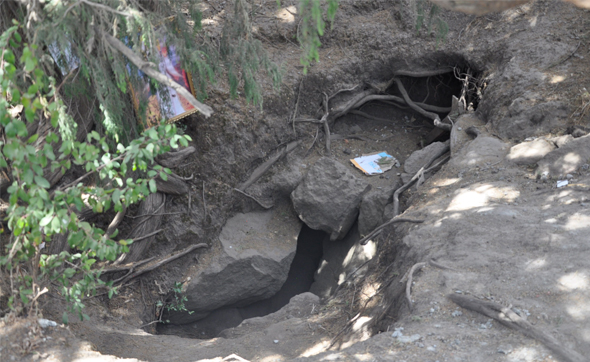
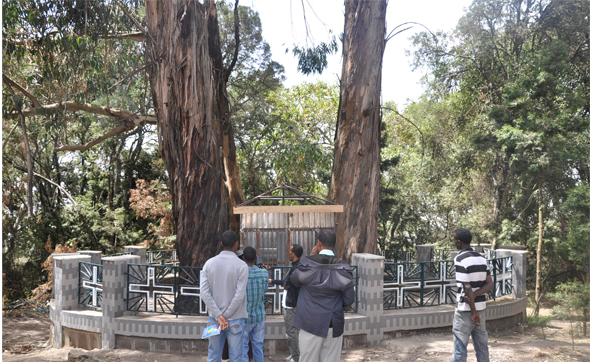
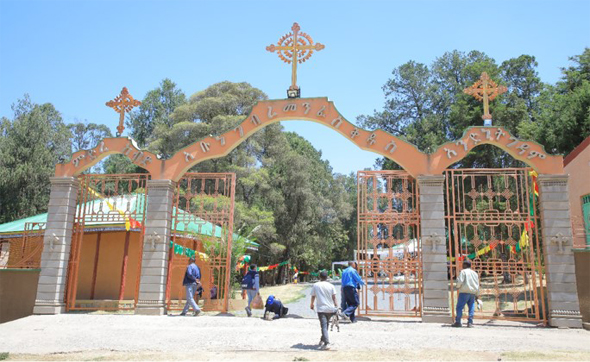

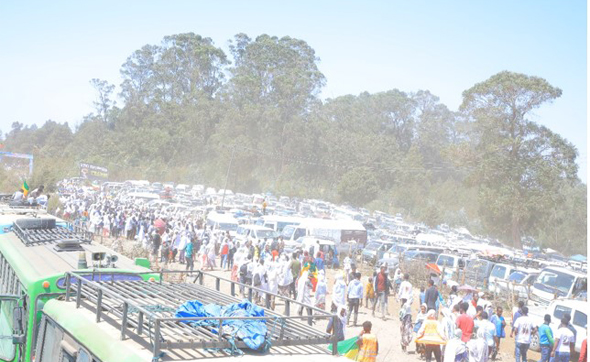
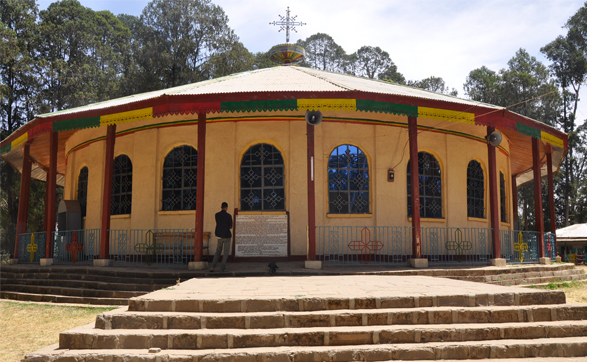
It is clear that Mdrekbed Abbey is one of the ancient and historical churches and monasteries in Ethiopia. The monastery is a holy place that is highly respected by the followers of the Orthodox faith, so thousands of followers and visitors of the religion attend the place every October and March 5th. This monastery is located in South Shewa, Gurage Zone, Sodo District, Swatina Monastery, Kebele G/Mahber, in a place called Mdre Kebd.
This monastery is 122 kilometers away from Addis Ababa. This means that the main road from Addis Ababa to Butajra is 104 kilometers asphalt, while 18 kilometers from the main road turn left on a pista/paved road.
The climate of the area is bad for vines and the monastery is surrounded by long-lived natural trees such as olives, cedars and cedars, so it has a windy and cool climate.
Mdre-Kbed Monastery is said to have been built in 1014 AD during the reign of Emperor Andrew by the Egyptian Abune G/Menfus Sa’ud. It is explained that Abune G/ Menfus Sa’d was born in a place called Mesa in southern Egypt and entered the great monastery that was managed by Father Zemed Berhan when he was 3 years old. We have been able to understand the rank priesthood that was given in the monastery from His Highness Archbishop Abune Abraham, who completed spiritual teachings such as Askeman and rank priesthood and traveled around the Egyptian monasteries for 300 years teaching them. After this, in the 11th century, Abune G/Menfus Sa’ud came to Ethiopia accompanied by 60 Anabs and 60 Anabarts in a chariot of light and blessed them for the first time.
Regarding the establishment period of the monastery, various informants and writings have mentioned it at different times. Half of these are said to have been founded in the 11th century, while some say they were founded in the 14th century.
የምድረ -ከብድ ገዳም አቦ
The name Mdre-Kbed comes from the Geez word Mdre-Kbed and its meaning is firm, great, special, high mountain, glorious, difficult place. King Andrew built the first church in this ancient monastery and it is said that he gave 280 shields of land for the monastery.
The other church of the monastery was built by Awrari Habte Giorgis before the reign of Emperor Minilk, but it is said that it was covered with tin in the 1920s by Queen Zewditu.
A cave where Abune Ge/Menfus Sa’ud used to walk from Mderkebd to Zzkala is located at a close distance to the east of the monastery. Our informant told us that this cave is called the Chariot of the Holy Spirit. It is said that after staying for 562 years, Abune-G/Menfus Holy rested on the 5th of March and his burial is located there at Mdrekbed Monastery.
Medre Kebed Monastery is a monastery that has faced many ups and downs. These are the destruction caused by the invasion of Ahmed Gharin and Italy. It is a fact that we know in history that many churches and shrines were burnt down during the leftist occupation. Accordingly, Mdre-Kbed Monastery suffered the same fate.
The other is said to have been slaughtered by fascists during the Italian occupation, with over 300 parishioners inside. It is said that Medre Kebed Monastery is an ancient monastery that is more than 970 years old.
Places to be seen and visited in Sodo Woreda
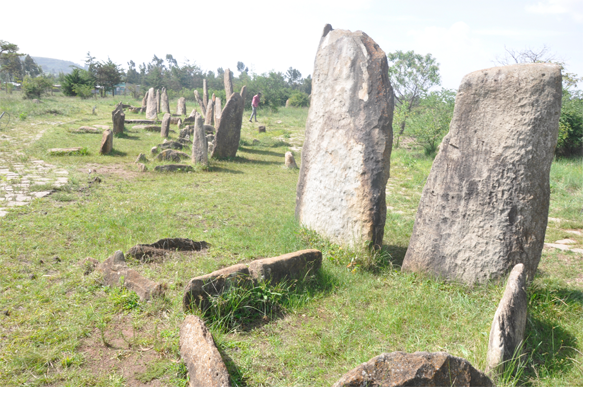
12 km away from Tia city, the village of Kebele has an attractive landscape and a mountainous climate. It is a kebele where there is a large horse riding field, large monasteries, and a historical stone plant in the shape of a spear.
Morege: It is a Kebele located about 8 km from the town of Wona in the Great Wilderness Monastery Road. It also contains sword-shaped plant stones registered by the district culture tourism.
This kebele, which is about 8 km away from the district capital, Bui, is a kebele where there are about 50 plant stones with sword images.
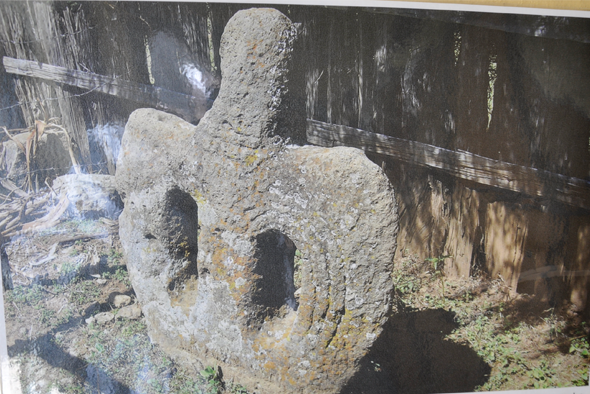
:- This kebele is estimated to be 14 km away from Gogeti 3rd chest river. It is a kebele where up to 30 historical plant stones in the shape of male genitalia are found.
Located about 7 km from the capital city of Bui, Fatu Kebele monasteries and more than 500 stone carvings with sword images are worth your attention.
Kola Nurena is located about 5 km from Kela on the level gravel road that stretches from Kela to Aymel. The road has become a source of beauty in addition to its regular service to various kebeles. What makes this road unique is that the mountain range wraps around like a rainbow and looks like a level ring road from above. In addition, she owns a long-standing stone plant with the image of a sword and a thunderbolt.
About 4km away from Bui town, Frishi Kebele has many attractions. It is the leading kebele of the district where extensive irrigation activities are carried out. In addition to this, there are up to 4 sword and stone plant stones and the goal cave of Frishi Malles. In general, there are several historical places in the district. We have many sights to see, including the UNESCO-listed Thia Plant Stone and the nationally-known historical Drekbad Monastery. Let’s enjoy ourselves and get to know our country by visiting these places for the expansion of tourism.
It is said that the Maraf Tzadka Kondaltiti Monastery was founded in the 12th century and is 850 years old. If we start from the name, the name was called Kondel. Then a woman named Titi, who was strong in her faith, was chased away by the idol worshipers because of her faith. Then where did she go? When they talk They said, “Titi entered Kondal” and the fathers said that Kondal started being called Titi.
Although the monastery was old enough to be repaired with the monks of Zzkala Abo and Drekbad Abo, but due to its age, many fathers made extensive efforts to close it down, but it has not yet reached this day.
Although there are no written articles about the monastery, it is said that there is a monastery with the special name Werebo Zena Markos Monastery in West Shewa Zone of Oromia region. In addition, the history of the monastery is mentioned in a book called Haymelal.
Today’s monastery, since the establishment of yesterday’s Kondaltiti K/Baalewolde Church, many fathers have tried their best to preserve its historicity. Among them, Abune Zena Markos, the hero Balcha, Abba Nefso Dejazmach, Habtegiorgis, are just a few of the many.
Especially Abune Zena Markos had a large share. Among the works they did, they played a large part in expelling the idolaters who were here so that this place would remain a place of faith.
Among the miracles of the monastery, as to describe.
There was a deity named Gerdon who lived in this monastery. This deity Abune Zena Markos cursed him and died, then he was buried and later she spat on him saying that he would not accept land.
When others died in disbelief, she would spit that she would not accept land. Then a father named Aba Knefe Michael came from Madre Kebd Abbot and bought her the land. Since then, she started receiving land.
Once upon a time, when a church made of grass was burning here in Gibi, a fire extinguisher that came out of the roof to put out a fire escaped from the hand of a man and fell and survived without spilling the fire and without breaking the fire.
The fathers of the monastery explain that when Italy invaded our country, Italian citizens went to bathe in the temple, which is a healer and rescuer, and were chased away by a dragon.
It is worth mentioning that even today, the Sabbath house of the medicine world, the Sabbath house that drinks under an olive tree, does not receive a single drop of rain even during heavy rains.
This present building, the church, Deje Salam and Betelhem, was changed from a grass house to the current building in 1946. The building was built by Dejach Balcha Aba Nefso and finished by Fitt Awrari Habte Giorgis.
The roofing material used to build the building came from an area with a unique name called Wegaram. In order to bring this chaos and conflict here, 37 parents/introducers accepted and brought it here. Then, in 1990, it was renovated by the right-wing party, Sabsab Usman, and then it was renovated by the right-wing party, Hailu Qawwal.
Since the monastery has a long life, there are different types of olive, cedar, cedar and different types of trees.
The legacy of Ma’rafe Tsadqan Kondaltiti K/Baalewold Monastery
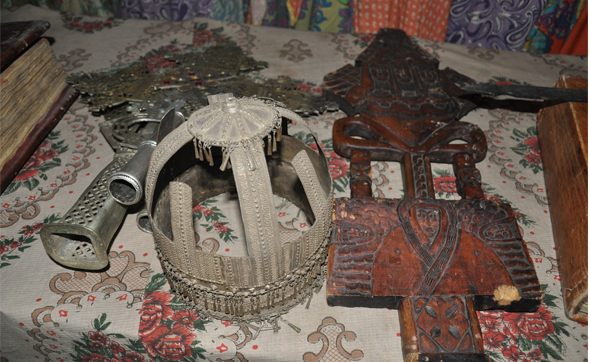
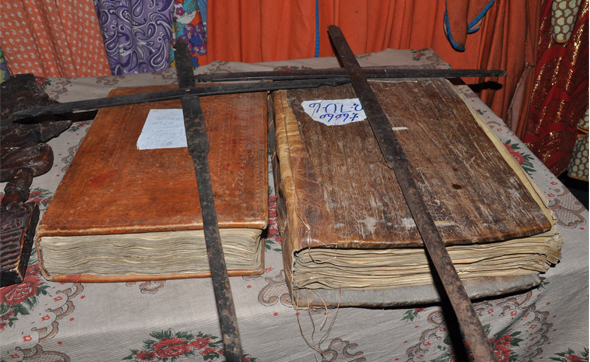
Among the relics in the monastery are scrolls, bells, crosses, clothes, etc.
It should be the duty and responsibility of all society to protect and develop such resources of our district to pass it on to the future generations as well as to increase the flow of tourists in our district so that our people can benefit from the income from visitors.
Many archeologists and historians agree that the Tia plant stones are part of the megalithic tradition of central Ethiopia called Sodo. Both local residents and European explorers say that the region that was called Sodo covered the entire area from the Awash River, which is 45 km southwest of Addis Ababa, to 125 km away. The Sodo of that time included the present-day cities of Lemen, Tiana, and Buen.