Tia World Heritage Site and Its Environs

Statue
0
UNESCO
0
Age
+ 0 A.D

History

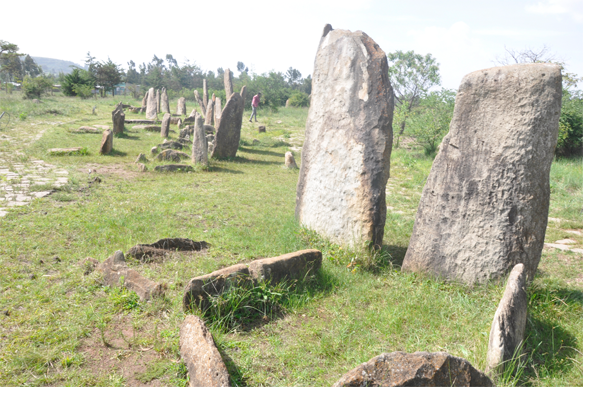
Tiya World Heritage Site, placed in abandoned field about 88kms southwest of Addis Ababa, straight down to Butajira Road, symbolizes a unique survival example of outstanding human endeavor. The site is exactly located 400m east of Tiya town. The stele field, seats on the Kondaltiti massif, elevates 2400m above sea level.

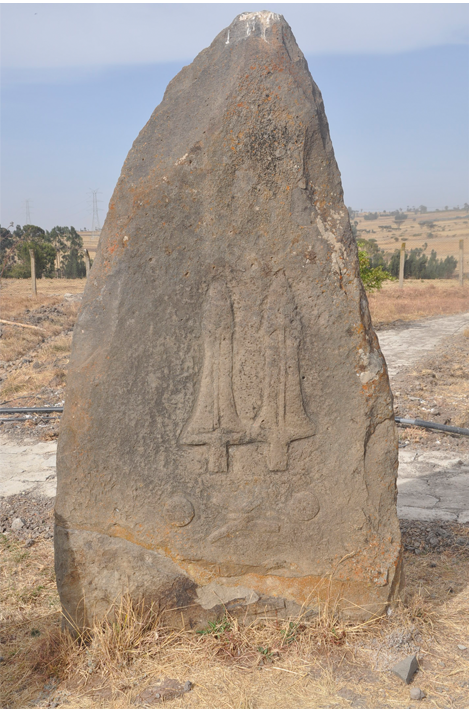
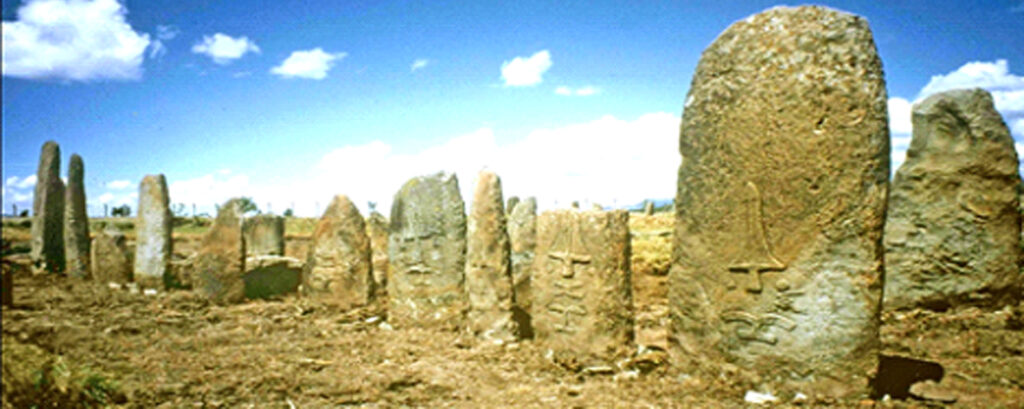
Tiya distinguishes with standing stelae, which are supposed to be grave markers. Circles of smaller stones mark the graves. Archaeologists dug up many skeletons from which they could be dated to 1200-1400 A.D. Among 36 standing stelae, 32 of them are decorated.  A sword design is frequent among the stelae. Since 1980, the outstanding universal value of the Tiya megalithic site has been recognized as a World Heritage Site (WHS) under the UNESCO World Heritage Convention.

Tiya qualifies for inclusion on the world Heritage List under Criterion I as the stelae with their enigmatic configurations are unique as “a masterpiece of human creative genius.” In addition, they are highly representative of an expression of the Ethiopian Megalithic period which clearly qualifies them to be included under Criterion IV (Be an outstanding example of a type of building, architectural, or technological ensemble or landscape which illustrates (a) significant stage (b) in human history) (ICCMOS, Paris 1980.05).

አቶ ደሱ አበጋዝ የሶዶ ወረዳ ዋና አስተዳዳሪ

The region of Sodo region in southern Ethiopia is dotted with numerous archaeological sites, comprising hundreds of sculpted stelae. The megalithic stelae of Tiya are the most representative of the Ethiopian Megalithic culture, which spreads over the far-side of the Awash River in southern Ethiopia.

Background of Archeology

Tiya is part of the Sodo Megalithic Tradition, which consists of more than160 sites. V. Chollet and A. Nivuille first reported the Tiya megalithic site in 1905. In 1931, F. Azais and R. Chambared had signified the importance of the site. Systematic survey in the Sodo region, however, carried out in the 1970’s by F. Anfray, who described the characterizations of the megalithic tradition in the region. Anfray (1982) categorized Tiya steles as part of the Sodo Megalithic Tradition.


Subsequently, since 1982, R. Joussaume had undertaken systemic excavation at Tiya and the results of his meticulous work has become significant for megalithic tradition in the region. Cloud Bouville, an anthropologist and director of research at CNRS, Marseille, excavated 45 tombs, which include 54 skeletons. Out of these, 35 of them are men and the rest female. The fossils dated in France in radiocarbon dating 12th -14th century AD.

In 1998, a restoration team led by Bertrand Poissonnier re-erected the stelae of Tiya that had been fallen down since unidentified period, because of undisclosed reasons. Poissonnier proposed the founding of a megalithic museum at Tiya.

Yonas (et al 1999), in their report to ARCCH, confirm the presence of 26 megalithic sites (including the famous site of Tiya) between Buye and Lemen towns in Soddo Wereda. Sites under family protection seem to be relatively well preserved as they are inaccessible to others. However, the report reveals that the stelae are undergoing an increasingly serious destruction due to manmade and natural factors. The report also gave emphasis to the foundation of a megalithic museum at Tiya, which will represent a single cultural tradition that was stretched in south-central Ethiopia.

In 2003, Roger Joussaume, in his report addressed to ARCCH, emphasizes the importance of the translation of his book “Tiya, lÉthiopie des megaliths “published in France in 1995 into English. In the same report, Joussaume proposed the listing of seven new sites that are found within Soddo on the World heritage together with the site of Tiya. He further suggests that for each site restoration with limited excavation, protection, maintenance and surveillance and explicative board.

In 2006, Claude Tournemire, based on Joussaume’s suggestion, travelled through Soddo and recorded about 30 stelae sites with GPS and photographs.

Worku Derara (2006) in his unpublished MA thesis entitle “An Inventory of Megalithic Sites in Gurage Highlands” revisited some of the sites revisited by Yonas et al (1999), Joussaume (2003) and Tournemire (2006) and counted and recorded the sites.

Hailu Zeleke, in 2006-2007, had conducted field surveys in Tiya and its environs and collected data, which are supposed to be the bases for future management plan for Tiya WHS.  Hailu Zeleke, in his “Yetiya mekane Kirs Asetedader Sened” (A Preliminary Management Plan for Tiya WHS) also state that the established a management committee for the Tiya WHS is still functional in day-to-day activities of the site.

The Tiya town administration is one of the four urban Kebeles of soddo wereda. The nearby town known after the World Heritage Site is 88 km away from Addis Ababa, the capital city of Ethiopia. The Town lies within the Guraghe zone, one of the administrative zones of the Southern Nations and Nationalities Peoples Regional State (SNNPRS).

The Tiya monoliths are found within the Tiya town, about four hundred meters east of the highway, at the downhill and foot of the Dedeba stream in the south-west. The stream of Aleltu, runnig to the rolling hills of Wacho Gareno, dominates the area in the west. The river valleys between Aleltu and Dedeba mark the territory of the largest collections of monoliths with its ancient occupation from the distant past.

The Tiya Megalithic site is acknowledged as a site of deep historical and archaeological
significance that boasts the unique characteristics of both above the ground and
underground structures. The survey undertaken in 2014 demonstrated that the entire
number of the megalithic stele, situated in the Tiya World Heritage Site, is forty where thirty six of them are well dressed and decorated with various enigmatic symbols of
anthropomorphic, hemispherical and conical patterns associated with human body. As
numerous tombs are found spread over a large area, the megalithic site has been
interpreted as having a funerary function as burial tombs were discovered with remains of
human body, which were in poor condition.

The megalithic steles of Tiya are classified into three groups as Group A, Group B and
Group C. The first group (Group A) is consisted of thirty-three stele, currently all of them are
in an upright position. The second group (Group B) is composed of four stele that include
the stele of which the upper part has been taken to the Addis Ababa University , Sadist Kilo campus in 1968 (Anfray, 1978). The third group of the stele (Group C) is composed of three megalithic steles, which were discovered by a research team led by R. Jossuame in 1983. In the stele field of Tiya, burial tombs were found at a depth of 85 cm to 2 meters below surface, where all them were found full of fine clay and loams (Jossuame et al, 1995).

Gereno betiet field stelae

Location: - Gereno betiet kebele which located 12 km from tiya Town Site: - around betiet river Identification: - a shape of jebena or coffee boiler container with two holes Height: - about 50cm tall Quantity: - one
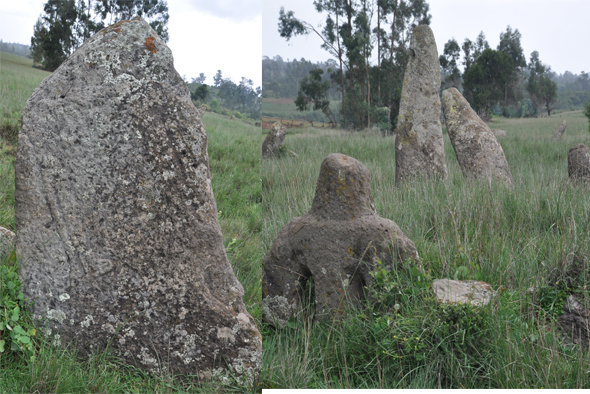
Gereno betiet field stelae

Location: - Gereno betiet kebele which located 12 km from tiya Town Site: - around betiet river Identification: - a shape of jebena or coffee boiler container with two holes Height: - about 50cm tall Quantity: - one
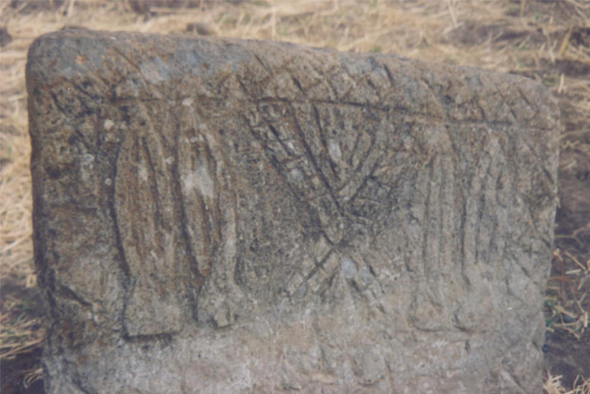
Gereno betiet field stelae

Location: - Gereno betiet kebele which located 12 km from tiya Town Site: - around betiet river Identification: - a shape of jebena or coffee boiler container with two holes Height: - about 50cm tall Quantity: - one
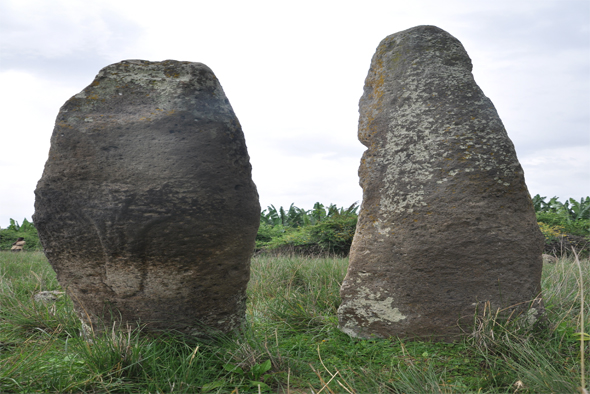
Gereno betiet field stelae

Location: - Gereno betiet kebele which located 12 km from tiya Town Site: - around betiet river Identification: - a shape of jebena or coffee boiler container with two holes Height: - about 50cm tall Quantity: - one
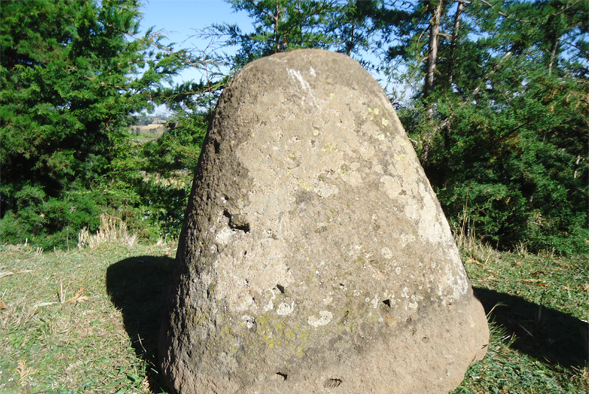
Dachina Hamus Gebeya field stelae

Location: - found in Dachina Hamus Gebeya kebele which Located 8km from Bui Town Site: - around Dubis village Identification: - most of them symbol of sword depicted on it Height: - from 40cm to 50 cm tall Quantity: - more than 50 stelae
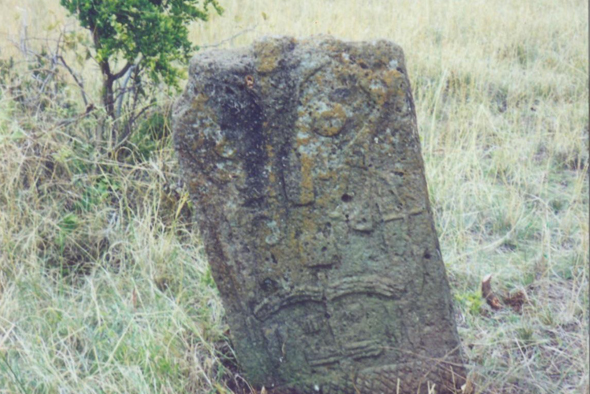
Damu Ande field stelae

Location: - found 14 km from Bui Town Site: - around Gebii Identification: - have different types of pictures engraved and most of them symbol of phallic shape. Height: - from 50cm to 1 m tall Quantity:- about 25 to 30 stelae
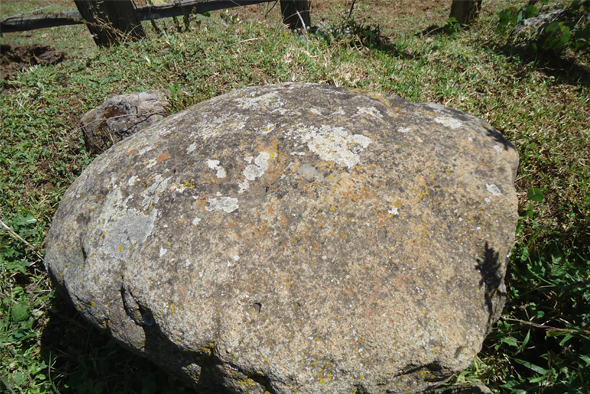
Kola Nurena field stelae

Location: - located 15km from Bui Town Site: - around Amirgei village Identification: - a symbol of sword and cartridge belt depicted on it Height: - about 2 m tall Quantity: - one stelae

Location